The paper map is open on the floor of a room in Paris and it has been folded back on itself so many times that the crease through the middle is wider than the road I am trying to find. It is January. The plan on the back of an envelope says sixteen months, twenty-five countries, roughly thirty thousand miles, and a finish line on the other side of a continent.
Gare du Nord, the morning of the seventeenth
Casey and I came into Paris from Canada with two rucksacks, one clock that was already wrong, and a folder of paper tickets that had taken three weeks to assemble in a kitchen. Neither of us had a mobile phone, because in 1993 a mobile phone was a car accessory, and neither of us had ever used anything called the internet. The directions were the folder, the folder was in my coat, and the coat had a hole in the pocket that I sewed shut in the station buffet.
The room was cheap and loud and about a ten minute walk from the platform. We had three days in Paris before the night train south, which we spent on the standard list, and by the fourth morning the only thing left to do was start.
"How far is it, honestly?" Casey asked at the barrier.
I did not know. Nobody in that station knew, and there was no way to look it up standing there. That is the part I find hardest to explain now: not the danger, which was mostly imagined, but the plain absence of answers. Every question about a bus, a border or a bed had to be put to a person, and every person had to be found first.
What we had, and what we did not
The budget for the whole thing was tight enough that I still remember prices from that winter. A bed in a hostel dorm cost less than a meal in a cafe. Trains were the expensive line item, so we took buses where buses existed and hitched where they did not, which was more often than the guidebooks suggested.
What we had was a folder of pre-booked long legs, a phrasebook, a passport with pages to spare, and the understanding that the route would change every time a border closed or a ferry went out of season. What we did not have was any way to know any of that in advance.
- Sixteen months on the road, ending with a move to the United Kingdom.
- About thirty thousand miles, which is roughly fifty thousand kilometres, over land and water.
- Twenty-five countries, most of them crossed without flying.
- Two of us at the start, one of us by the end of the first season.
The route, written in pencil
Paris first, then a night train down to the Riviera and on through Italy, because the overland way into Greece runs east through Brindisi and a ferry rather than over the top of the map. Athens, then the ferries: Piraeus to Crete, Crete to Rhodes, and from the Dodecanese a boat that was never on the timetable at all.
After Greece the line on the envelope gets vague, and honestly it was vague at the time. The shape was south, always south, through Turkey and the Levant and down the length of the continent to Cape Town, with Nairobi on the way back. The order was set by visas and by seasons rather than by preference, and a visa that took four weeks changed the plan more decisively than any guidebook could have.
I crossed a border on a ferry in a storm and spent the night on the deck because the inside was full, and I have a photograph of the sky that morning which is better than anything I have taken since. I also have a receipt for a bus that took eleven hours to cover what the timetable said was five. Those two things sit next to each other in the folder, and they are the trip.
The part I would do again differently
Casey and I parted company a few months in, on a platform neither of us had planned to leave from, and after that I was travelling alone. It was not the arrangement anybody would choose and it made me a better traveller by necessity, because every decision about money, safety and where to sleep had to be made by one person who had nobody to hand the map to.
The other thing I would change is medical. I was managing a chronic condition the way you do when you are twenty-something and unbothered, which meant missing two planned stretches because I had not thought about how far apart the pharmacies would be. My rule now is blunt: you will be unwell wherever you are, so you might as well be somewhere you chose, and the choice includes knowing where the next prescription comes from.
I still keep the folder, though the tickets in it have gone the colour of weak tea. There is a receipt from a ferry company, a stub for a night train that left forty minutes late, a bus ticket with a destination I never learned to pronounce, and the envelope with the sixteen months written on the back in pencil that has outlived most of the pens I owned that year.
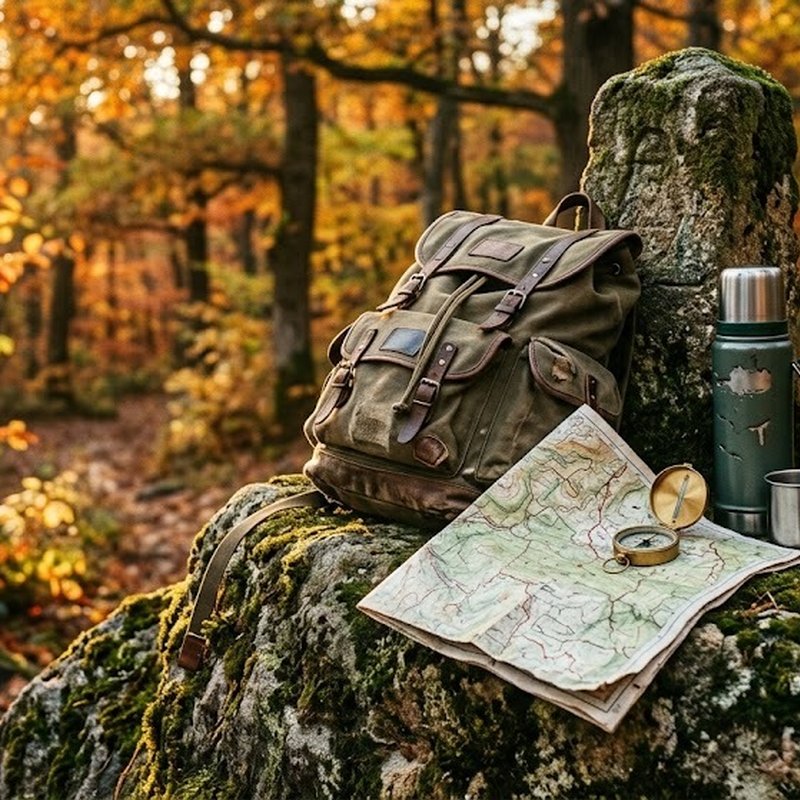
The morning it stopped being a plan
There is a moment on a trip like this when the envelope stops being a plan and becomes a list of things you have already done. For me it was somewhere in the second month, at a border where the officer looked at the folder, looked at me, and asked a question I could not answer in either language. I pointed south. He stamped it.
The folder went back in the pocket with the sewn-up hole, the map went back in the same wrong fold, and the sixteen months carried on one bus at a time. The numbers on the back of the envelope stopped being a target somewhere around the second border, and by the end they were a record rather than a plan.